GEM IDENTIFICATION & RESEARCH
TOKYO BANGKOK
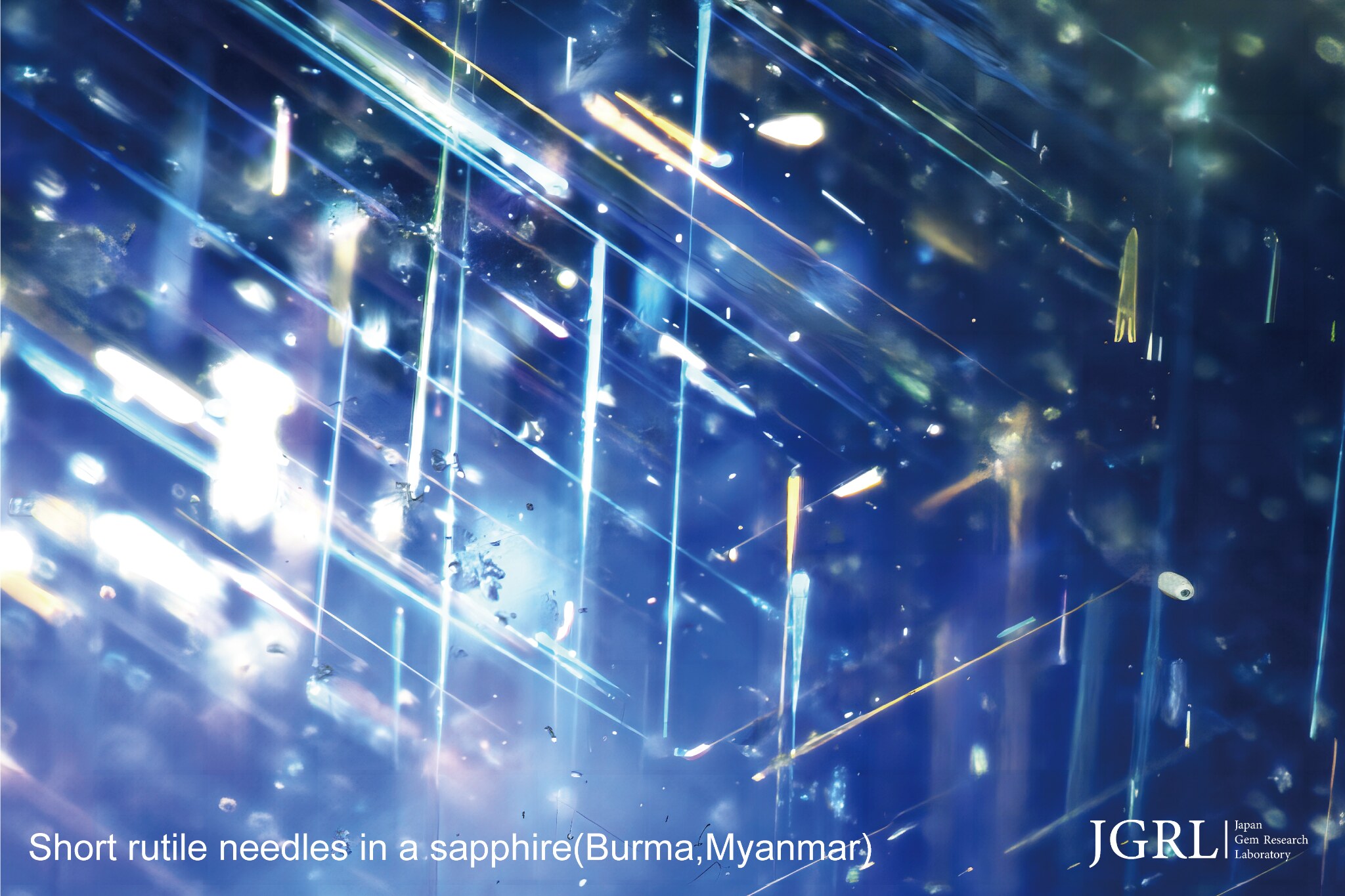
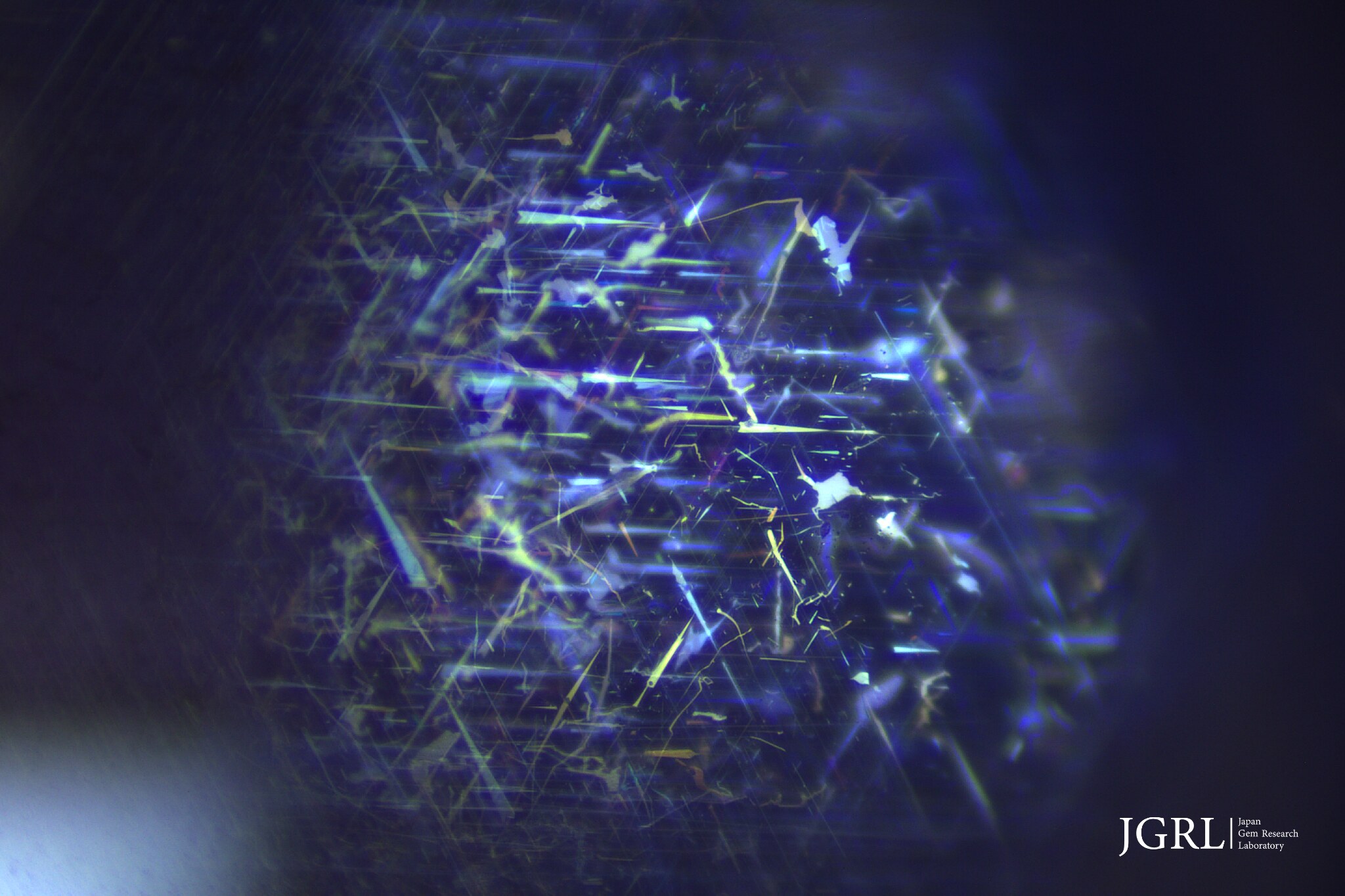
Rutile inclusions in sapphire, photographed through a microscope by JGRL.

JAPAN GEM RESEARCH LABORATORY

Understanding gems.
Through science.

Color, inclusions and spectral properties provide the clues.
Our laboratories in Tokyo and Bangkok bring observation and research together
to understand the characteristics of each gemstone.

TOKYO BANGKOK

SAPPHIRE · THE WORLD WITHINSapphire inclusions / Photograph by JGRL

VERIFY YOUR REPORT

Verify a Report

You can also scan the QR code on your report. How to verify

ABOUT JGRL

Understanding each gem
through research.

About Japan Gem Research Laboratory

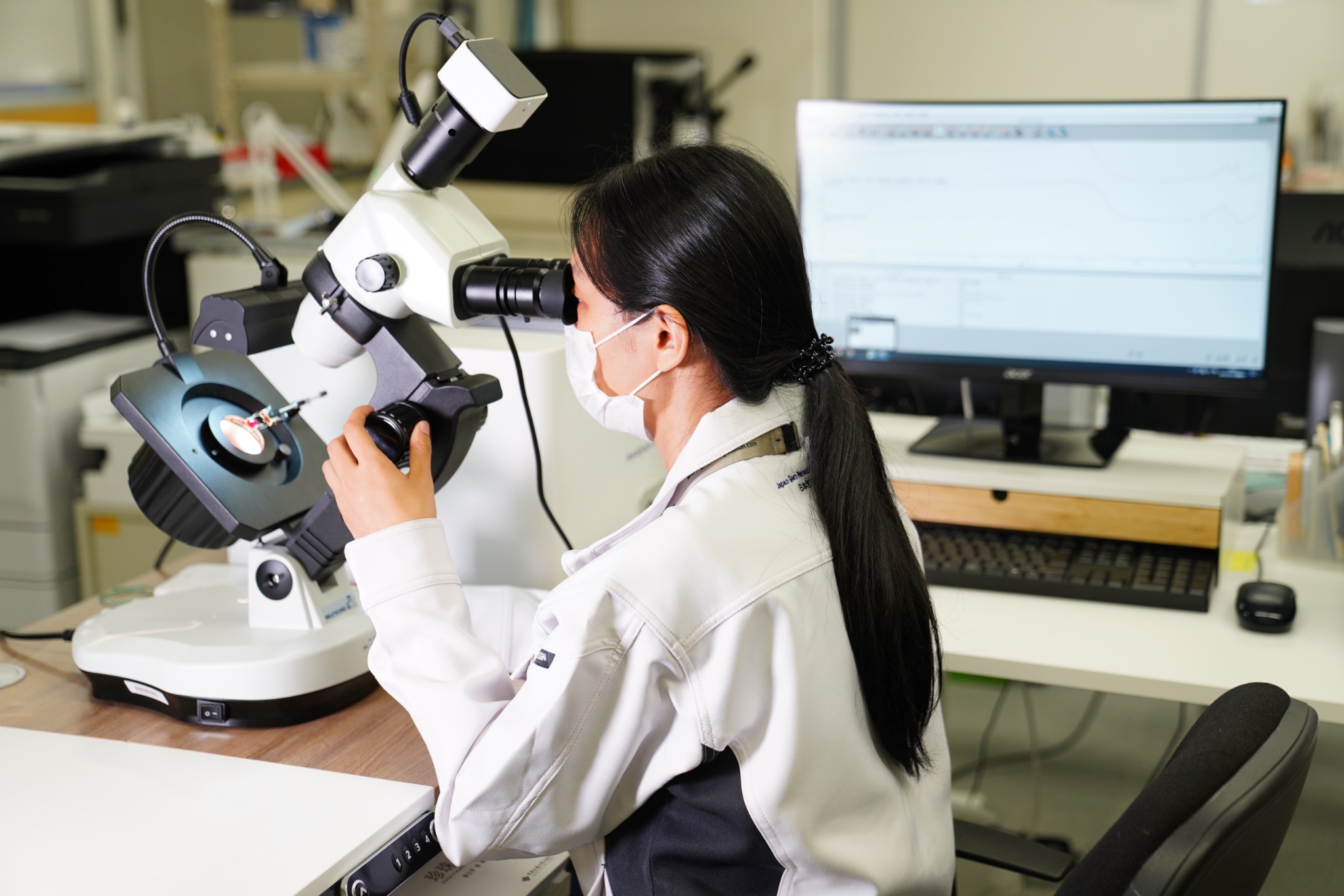
JGRL laboratory staff examining a gemstone under a microscope
INSIDE THE LABORATORYEvery observation contributes to an identification.

Practical experience.
A scientific approach.

Japan Gem Research Laboratory provides professional gem testing informed by experience in colored stone identification, classification and origin research, supported by reference data and published research.

With laboratories in Tokyo and Bangkok, Thailand, we offer testing of colored stones, pearls and diamonds for jewelry businesses in Japan and overseas.

RESEARCH & PRACTICE

We continue sampling and analysis in mining regions and pearl farms, developing our reference collection and contributing to gemological research.

GEMOLOGICAL SERVICES

Identification & Testing Services

Look beyond appearance.
Examine the evidence.

01

COLORED STONES

Colored Stones

We examine colored stones for identity, detectable treatments and geographic origin, drawing on reference materials and research to assess their characteristics.

  • Basic testing and gem identification
  • Examination for detectable treatments
  • Geographic origin examination
02

PEARLS

Pearls

From distinguishing pearls and imitations to examining nacre thickness, freshwater and saltwater identity and quality characteristics, we study each pearl's properties.

  • Pearl and imitation identification
  • Keshi pearl identification and bead-nucleus examination
  • Nacre thickness examination
  • Freshwater/saltwater identification and grading
Explore Keshi pearl identification
03

DIAMONDS & SIMULANTS

Diamond

We distinguish natural and laboratory-grown diamonds, including HPHT- and CVD-grown material, and examine look-alikes such as moissanite.

  • Basic diamond examination
  • Identification of HPHT- and CVD-grown diamonds
  • Identification of moissanite and other simulants

KESHI PEARL IDENTIFICATION

Keshi Pearl Identification

An X-ray view
inside non-bead-nucleated pearls.

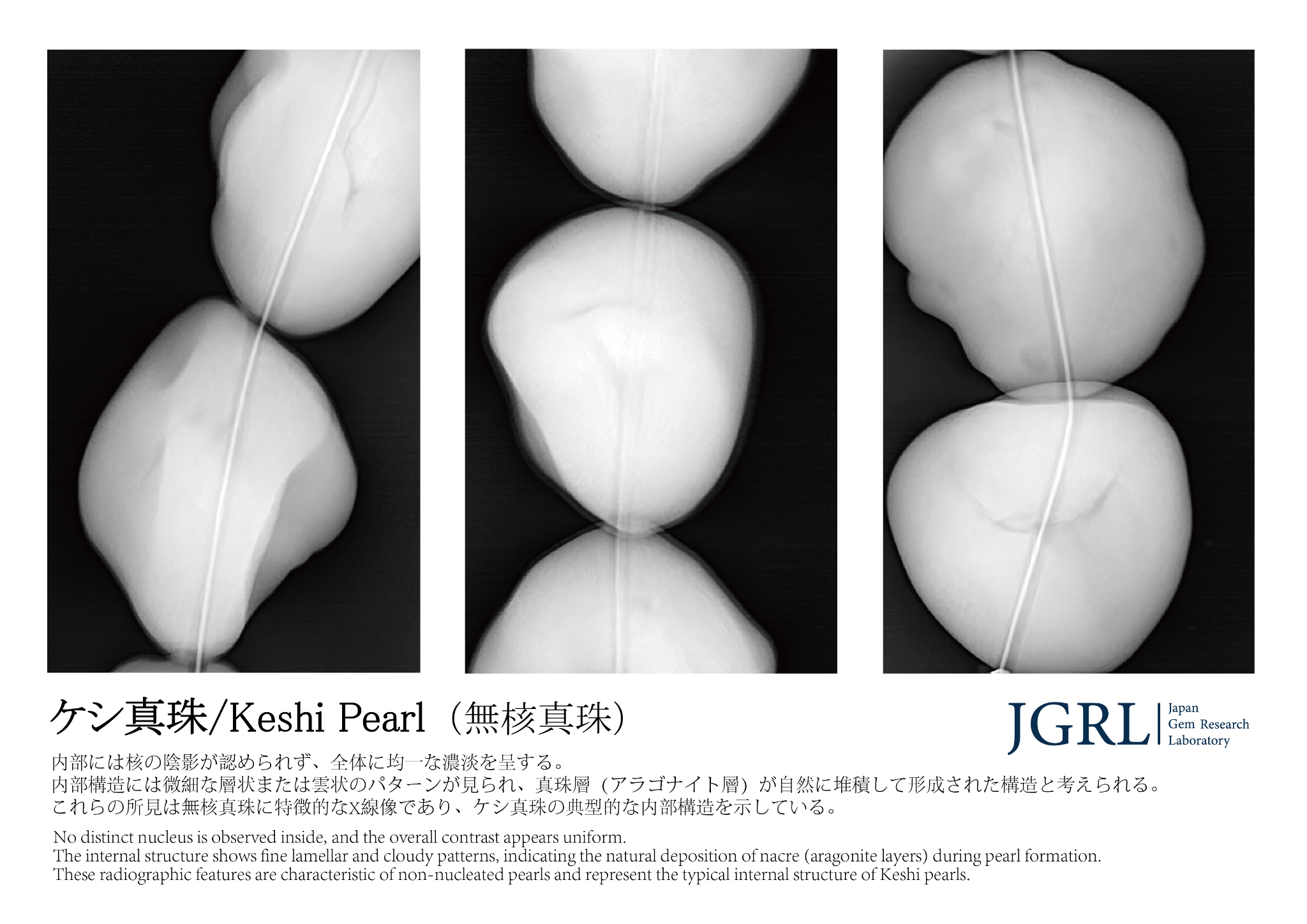
X-ray imaging reveals bead nuclei, nacre and internal cavities that cannot be assessed from appearance alone. We examine these structures to distinguish Keshi pearls from bead-nucleated cultured pearls.

  • Examine for a bead nucleus
  • Observe layered and cloudy patterns
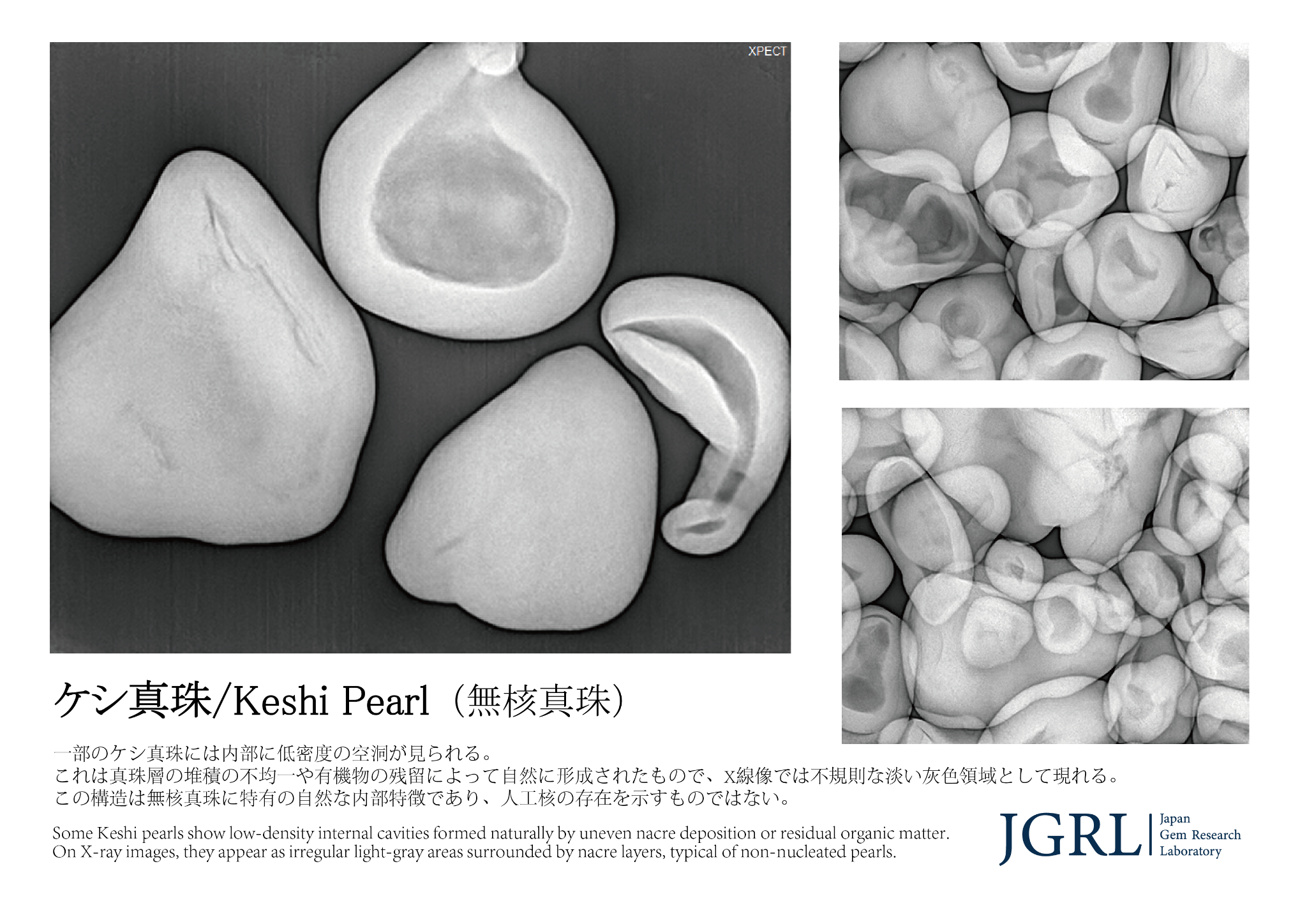
  • Assess cavities and nacre structure
Enquire about Keshi identification
Three example X-ray views of Keshi pearls, showing internal structures without a visible bead nucleus.
Enlarge the study
JGRL / X-RAY IMAGINGExamples of Keshi pearl internal structures
Compare internal structures Examples from X-ray examination
An example radiograph of Keshi pearls with irregular internal cavities surrounded by nacre.

Keshi pearls with internal cavities

Some Keshi pearls contain irregular internal cavities. A cavity alone does not establish the presence of an inserted bead; we also examine the surrounding nacre and internal structure.

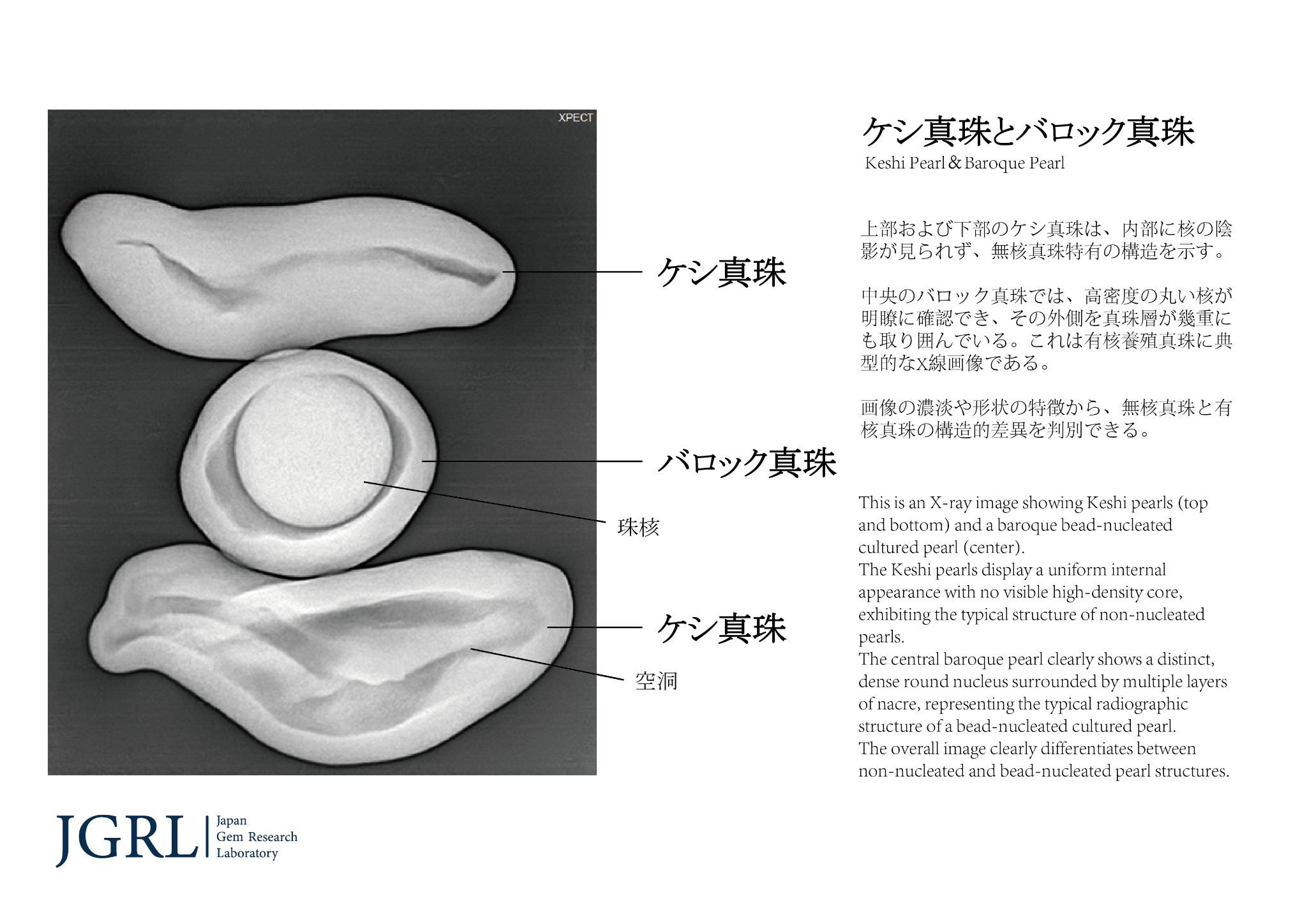
An X-ray comparison: Keshi pearls at the top and bottom, and a baroque bead-nucleated cultured pearl with a round nucleus in the center.

Comparison with bead-nucleated pearls

In this example, no bead nucleus is visible in the Keshi pearls at the top and bottom. The central cultured pearl shows a round bead nucleus surrounded by nacre.

Images and explanations: Japan Gem Research Laboratory (JGRL)

OBSERVATION & ANALYSIS

Observe closely.
Examine from different angles.

From inclusions seen under the microscope
to properties revealed through spectroscopy.

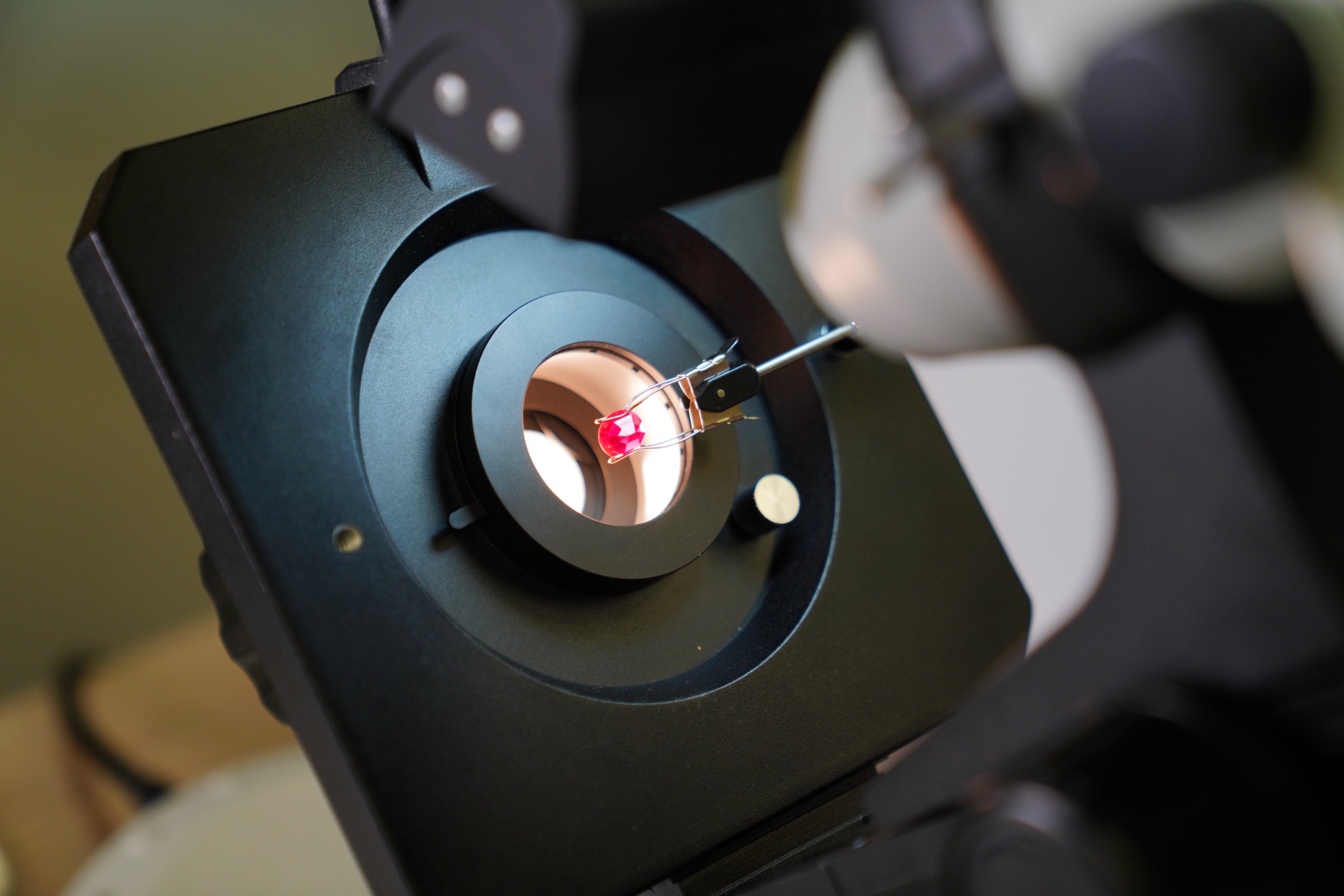
A gemstone mounted on a microscope stage for examination
Gem examination / JGRL

Our principal examination methods

01X-ray imaging
X-ray examination of pearl internal structures
02UV–Visible
Ultraviolet–visible spectroscopy
03FT–IR
Infrared spectroscopy
04FT–Raman
Raman spectroscopy
05XRF
X-ray fluorescence analysis
06Microscopy
Optical microscopy
07Physical properties
Refractive index, thermal properties and other tests

We assess observations and analytical results together, selecting methods appropriate to each item and examination.

20+

Experience that informs research.

Our specialists bring more than 20 years of practical experience to ongoing research, including work in mining regions and pearl farms and the publication of academic papers.

Qualifications held by our specialists

PROFESSIONAL QUALIFICATIONS

GIA G.G.

Graduate Gemologist

GIA Graduate Gemologist

FGA

Fellow of the Gemmological Association of Great Britain

Fellow of the Gemmological Association of Great Britain

AIGS A.G.

Accredited Gemologist

Asian Institute of Gemological Sciences Accredited Gemologist

Rutile needles inside a sapphire from Myanmar. Photomicrograph by JGRL.Enlarge photograph

THE WORLD WITHIN

Inside a gemstone,
clues are waiting to be read.

The shape and distribution of inclusions can help reveal a gem's characteristics. We record this microscopic world as part of our daily identification and research work.

Rutile inclusions in sapphire from Myanmar
Photograph: Japan Gem Research Laboratory (JGRL)

THE JGRL GEM LIBRARY

Discover the reasons
behind a gem's beauty.

Crystals, origins, colors, hardness and cuts.
An approachable dictionary of gemstone fundamentals.

Explore the Gem Dictionary

HOW TO VERIFY

How to
verify a report.

Use your report to
check its registered details.

Go to verification
01

Find the report number

Have the letters and numbers printed on your report ready, including any hyphens and periods.

02

Enter the number or scan the QR code

Enter the report number in the search field, or scan the report's QR code with your smartphone camera.

03

Compare the report with its registered details

Check the number, gem name, weight and other details. Contact the issuing laboratory if any information does not match.

QUESTIONS & ANSWERS

Frequently Asked Questions

Where can I find my report number?

Look for the report number or No. on your original report. Enter it exactly as printed, including letters, numbers, hyphens, periods and underscores.

Why does the search say no report was found?

Check the letters, numbers and punctuation. If the correct number still returns no result, contact the issuing laboratory.

Can online verification establish whether my gemstone is genuine?

Online verification checks registered report information. It does not establish that a particular item is the one described in the report. Check the item, original report and registered details together.

Can I use a smartphone?

Yes. Scan the QR code on the report with your smartphone camera and open the link to view that report's verification page.

OUR LABORATORIES

Tokyo and Bangkok.
Two places, one approach.

Japan Gem Research Laboratory (JGRL)
Japan Gem Research Laboratory

02

Bangkok

BANGKOK, THAILAND

919/1 Silom Road, Jewelry Trade Center
2nd floor, Suite #205, Bangrak, Bangkok
10500 Thailand
View location on map

SCAN TO VIEW

Report verification QR code